
Sometimes a kitchen feels “off,” even when nothing appears broken. Cabinets may still be sturdy. Appliances may still function properly. Yet the space feels cramped, outdated, or harder to use than it should. In many cases, the issue is not the entire kitchen — it’s the surface layout.
Countertops influence spacing, workflow, and even how natural and artificial light move across the room. When they are outdated, poorly sized, or improperly configured, they quietly limit the efficiency and visual appeal of the entire space.
Limited Prep Space Is Slowing You Down
One of the clearest warning signs is a shortage of usable prep area. If you constantly shift cutting boards or move small appliances just to make room, the layout may be restricting your routine. You might notice:
- No clear space beside the sink for washing and prep
- Very little room next to the stove for cooking tasks
- Appliances crowding key work areas
- Small, broken-up sections instead of continuous surface
Over time, these daily inconveniences make cooking feel stressful instead of smooth. Many homeowners begin wondering, when should you replace kitchen countertops, when simple tasks require extra effort.
Visual Breaks Disrupt the Flow
Older surface designs often include unnecessary seams, uneven transitions, or corner add-ons that interrupt continuity. While these details may seem minor, they can affect how the entire kitchen feels. Instead of one unified surface, you may see:
- Sections that end abruptly
- Slight height differences between areas
- Additions that appear disconnected from the main layout
These breaks create visual clutter. When surfaces lack consistency, the room feels pieced together rather than thoughtfully designed.
Outdated Depth or Overhang
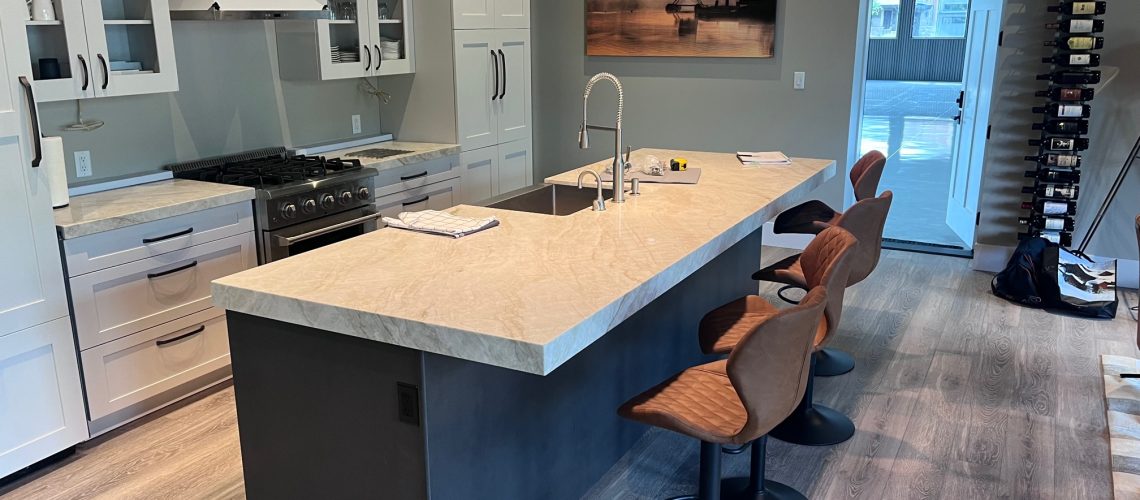
Design standards change over time. Many older kitchens were built with minimal surface depth, especially around islands or seating areas. Insufficient overhang can make stools uncomfortable and reduce legroom.
Common limitations include shallow surfaces or limited extension over cabinetry. This reduces flexibility for entertaining and limits how comfortably guests can gather.
In our experience working with Rigby ID countertops, adjusting depth and overhang often improves both comfort and functionality without requiring a full renovation.
The Layout Feels Smaller Than It Should
Surface design can influence how large or small a kitchen appears. Dark tones, thick edges, or bulky transitions may absorb light instead of reflecting it. This can make the room feel enclosed, even if square footage has not changed. Design factors that contribute to this include:
- Oversized edge profiles that dominate the space
- Finishes that reduce light reflection
- Surface colors that compete with cabinets
- Island placement that interrupts natural movement
Updating countertops can brighten the room, improve flow, and create a more open feel—all without removing walls or altering the footprint.
Conclusion
A kitchen should support your daily routine, not slow it down. If your space feels crowded, disconnected, or harder to use than it should be, the surface layout may be the missing piece. Updating countertops is often one of the most effective ways to refresh movement, improve comfort, and modernize the entire room—without tearing everything out.
At Custom Royal Countertops & Tile, we look beyond color and material. We focus on how your kitchen actually works.
Ready to unlock the full potential of your kitchen? Contact Custom Royal Countertops & Tile at (208) 313-8385 and let’s design a space that feels effortless every day.