
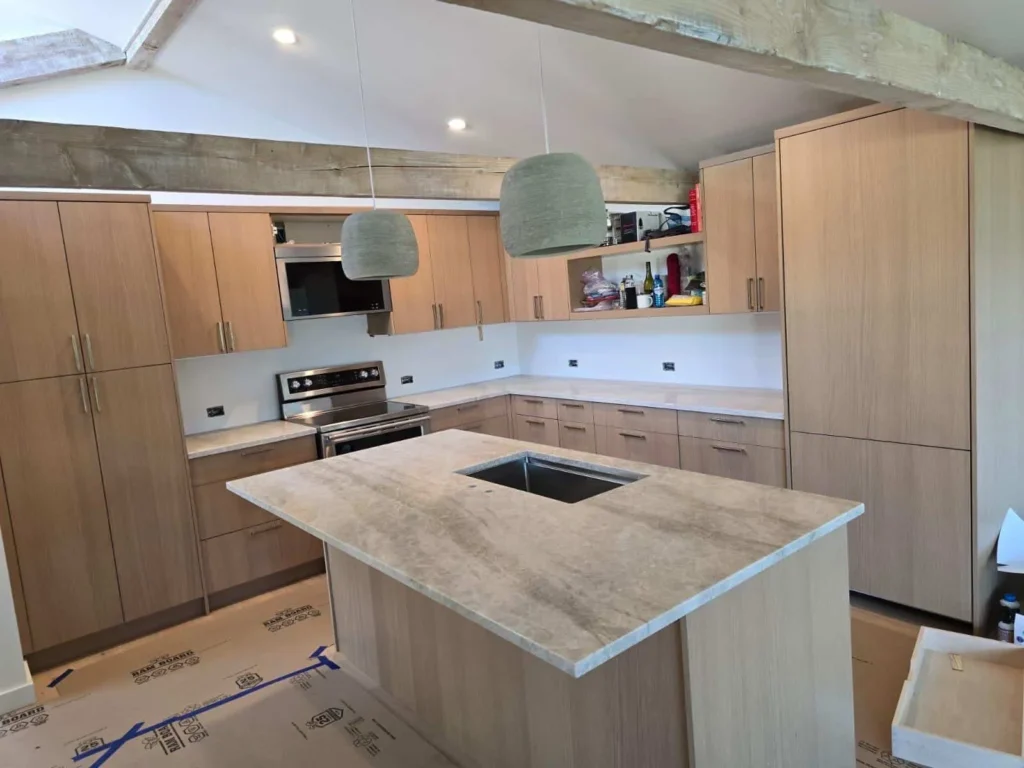
Planning Countertops Around Cabinets and Appliances for Better Flow
A kitchen should feel open and natural to move through. When cabinets, appliances, and surfaces are planned together from the beginning, the space works better every single day. Poor coordination can make even a large kitchen feel crowded or difficult to navigate.
Many homeowners focus only on color when selecting new surfaces. But true performance comes from thoughtful planning. Layout, spacing, height, and alignment all influence how comfortable and efficient the kitchen feels. When every element works together, the room feels intentional rather than assembled piece by piece.
Aligning Countertops With Cabinet Layout
Cabinets form the structural foundation of the kitchen. Because they determine height, depth, and overall configuration, the surfaces installed above them must align precisely. Even small miscalculations can disrupt the visual balance of the entire room. Good planning often involves:
- Matching surface depth exactly to cabinet dimensions
- Allowing proper overhang for seating and comfort
- Coordinating edge profiles with cabinet style and finish
- Maintaining consistent height across all sections
Understanding how to match countertops with cabinets and appliances helps prevent uneven lines, awkward seams, or design mismatches. In our experience with Rigby ID countertops, careful alignment creates a kitchen that feels seamless and professionally designed.
Planning Around Appliance Placement
Appliances define how the kitchen is used. Their size, placement, and door swing all impact surface layout. Without proper spacing, prep areas can feel cramped or inefficient. Here are some important considerations:
- Leaving adequate prep space beside the range
- Providing landing space near the refrigerator
- Ensuring proper clearance for appliance doors
- Avoiding tight corners that restrict daily movement
Proper planning ensures surfaces support cooking habits rather than interrupt them. When countertops are positioned thoughtfully around appliances, the kitchen becomes more practical and easier to use.
Creating Efficient Work Zones
A well-designed kitchen is organized into purposeful zones. Preparation, cooking, and cleaning should flow naturally from one area to another. When surfaces are broken up or poorly placed, daily tasks take longer and feel less convenient. Strong layout planning focuses on:
- Clear movement between sink, stove, and refrigerator
- Continuous surface space for meal preparation
- Avoiding unnecessary breaks in key work areas
- Selecting durable materials for high-traffic zones
Well-positioned countertops improve efficiency and reduce strain during busy routines. Small adjustments in layout can make a noticeable difference in everyday comfort.
Balancing Style With Function
Visual appeal still matters. Surface color, thickness, and edge style influence the overall character of the kitchen. However, design choices should support usability rather than compromise it. Smart design decisions may involve:
- Choosing finishes that complement cabinet tones
- Selecting thickness that feels proportionate to the room
- Coordinating backsplash and transition details
- Considering long-term performance and maintenance
When you work with us, we focus on achieving both form and function. Our experience with countertops allows us to guide homeowners toward choices that look beautiful while performing reliably for years.
Final Thoughts
A well-planned kitchen begins with thoughtful coordination between cabinets, appliances, and surfaces. Small layout decisions can make a significant difference in how your space feels and …
Planning Countertops Around Cabinets and Appliances for Better Flow Read More »