Custom Royal Countertops and Tile LLC

November 2026

Why Your Quartz Countertop Veins Don’t Match at the Corners

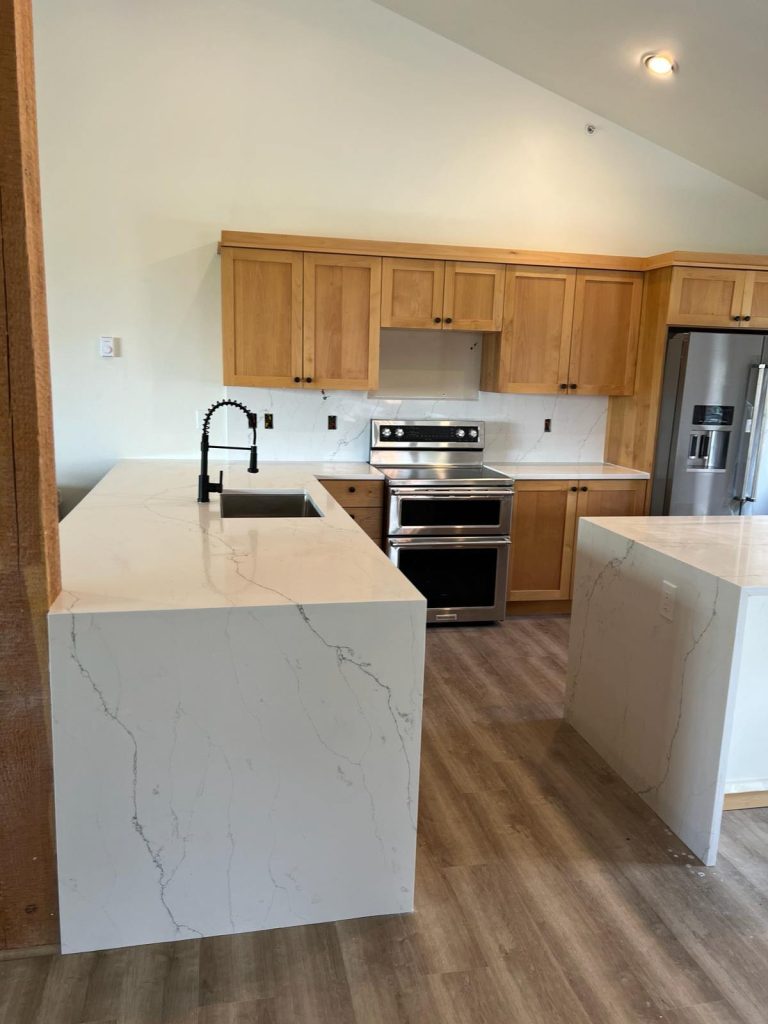
Picture a white kitchen island with soft gray veins running across its surface. The pattern looks like a river flowing through stone. Now imagine that river suddenly stopping at the edge, with another line beginning several inches away.

The stone is beautiful, but something feels wrong.

This can happen when quartz pieces are cut without enough attention to how their patterns will meet. The good news? Many unwanted surprises can be avoided before the first cut is made.

One Slab, Several Pieces, Different Results

Think of a quartz slab as a large picture. Every cut separates part of that picture from the rest.

When those pieces are moved, turned, or joined, the original design may no longer flow in the same direction.

This becomes especially noticeable with bold, marble-like veins. Small, scattered patterns tend to hide these changes better.

A kitchen with several corners can make the process even trickier. The fabricator must consider the shape of the cabinets, sink openings, and available slab space while planning the cuts.

That is why choosing beautiful countertops is only the beginning. How the material is arranged matters too.

What Happens Before the Cutting Starts?

At Custom Royal Countertops & Tile, we know homeowners want to picture their finished kitchen before installation day.

One helpful step is reviewing the planned slab layout when that option is available.

During this stage, several decisions can affect the final appearance:

  • Pattern direction: Should the main veins run toward the sink or across the island?
  • Corner placement: Where will two pieces meet, and how will their patterns look together?
  • Seam location: Can the joining line be placed somewhere less noticeable?
  • Slab selection: Would another slab provide a better pattern arrangement?

These choices must also account for safe fabrication and proper support. A perfect-looking pattern is not useful if the layout creates weak stone sections.

A Perfect Match Isn’t Always Possible

Here’s something worth knowing before you buy: not every quartz design can be matched seamlessly.

Some collections offer bookmatched patterns. These use paired designs that create a mirror-like appearance when placed together.

Other products have veins that cannot be matched exactly, even with careful cutting.

If you’ve been searching for how to match quartz countertop veining at seams, the most useful question may be, “What kind of match is possible with this particular slab?”

An experienced countertop fabricator can explain the difference between a close visual match and a true continuous pattern.

Don’t Let a Small Sample Make the Whole Decision

A small showroom sample can tell you whether you like a color. It cannot always show how large veins will travel across a full kitchen.

Before making your final choice, try to see a larger section of the material. Ask how the pattern may change around corners and where seams might appear.

For homeowners considering Idaho Falls ID countertops, this conversation is especially valuable when planning large islands or L-shaped kitchens.

You may discover that a softer pattern suits your layout better. Or you might …

Why Your Quartz Countertop Veins Don’t Match at the Corners Read More »
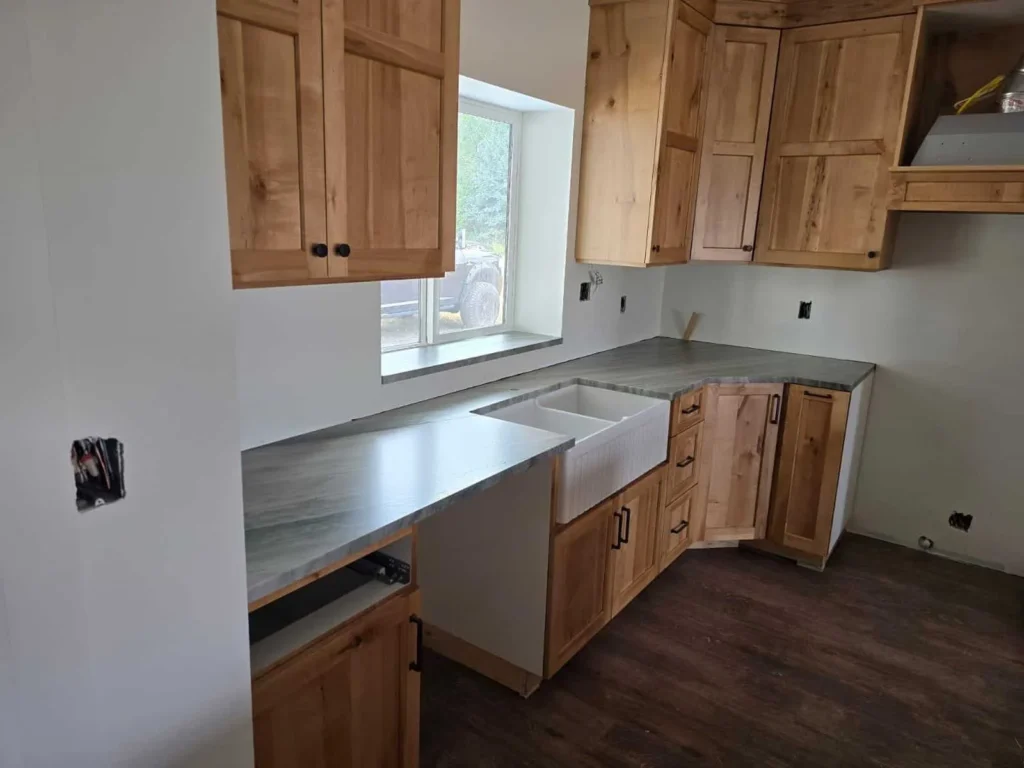
New Countertops on Old Cabinets? What You Need to Check First

You love your kitchen cabinets, but the old counters need an upgrade. Replacing just the stone surface seems like a smart way to refresh your kitchen without paying for a full remodel.

But there’s one important question: Are your cabinets ready to hold the new material?

Stone is heavy, and even a beautiful new surface can develop problems when the cabinets underneath are not properly prepared. Before choosing your favorite color or pattern, it helps to check what’s supporting it.

Your Cabinets Might Not Be Level

Over time, cabinets can shift slightly. Floors may settle, screws can loosen, and older cabinets may no longer sit perfectly level.

These changes might be hard to notice until a new stone slab is installed.

An uneven base can create gaps beneath the stone or place pressure on certain areas. This is especially important around sinks and corners, where the material may already have narrower sections.

When homeowners choose Idaho Falls ID countertops, we recommend checking cabinet alignment before the installation date.

Five Things to Inspect Before Installation

You don’t need to become a construction expert to recognize possible cabinet problems. A few simple checks can help you know when professional attention is needed.

Look for these warning signs:

  • Loose cabinets: Boxes that move when gently pushed may need stronger attachments.
  • Water damage: Soft wood beneath the sink can indicate hidden moisture problems.
  • Uneven surfaces: Cabinet tops should provide the support required for the chosen material.
  • Weak framing: Damaged or poorly built cabinets may struggle with heavy stone.
  • Poor connections: Cabinets should be properly secured to each other and the surrounding structure.

A professional countertop installer can identify support concerns during the measuring process.

Can Old Cabinets Really Hold Heavy Stone?

Sometimes they can! Many existing cabinets are suitable for new stone surfaces when they are sturdy, level, and properly installed.

However, age alone does not determine whether cabinets are strong enough.

Their construction, condition, and layout all matter. Large islands and wide unsupported openings may also need special attention.

If you’re researching how to prepare cabinets for stone countertop installation, begin with a careful inspection rather than assuming everything underneath is ready.

At Custom Royal Countertops & Tile, we believe preparation helps prevent avoidable problems later.

What Should Happen Before Installation Day?

Once your cabinets have been checked, there are several practical steps that can help the project move smoothly.

Before the installation team arrives:

  • Remove items from cabinets near the work area.
  • Confirm that plumbing and sink arrangements are ready.
  • Complete any required cabinet repairs or adjustments.
  • Make sure the installation area is easy to access.

Ask your installer when the old surface should be removed. Final measurements may need to account for the completed cabinet layout.

Experienced countertop professionals also check the material’s support requirements before placing heavy slabs.

A Beautiful Upgrade Needs a Strong Foundation

Keeping your existing cabinets can be a practical remodeling choice. But the best results begin with a stable base, careful measurements, and proper preparation.…

New Countertops on Old Cabinets? What You Need to Check First Read More »

Why Stone Countertops Crack Around the Sink—and How to Prevent It

Your kitchen sink gets used every day. You wash dishes, prepare meals, and clean up after family dinners. But have you noticed that the stone around your sink is often narrower than the rest of your kitchen surface?

That small detail matters more than you might think.

Cutting an opening for a sink changes how weight and pressure move through the stone. Without careful planning, the narrow areas around the opening may become weak points where cracks can develop.

What Makes the Sink Area Vulnerable?

A solid stone slab spreads weight across its surface. Once an opening is cut, there is less material available to carry that weight.

The narrow strips along the front and back of the sink can be especially sensitive during transportation and installation.

Sharp inside corners may also create areas where stress becomes concentrated.

When customers explore Idaho Falls ID countertops, we encourage them to think about sink placement as part of the overall kitchen design. The right layout can help protect both the stone and the sink.

Four Problems That Can Lead to Cracks

A crack near the sink does not always mean the stone itself is poor quality. Sometimes, the problem comes from how the surface was prepared or supported.

Common causes include:

  • Sharp cutout corners: Rounded inside corners can help reduce concentrated stress.
  • Poor cabinet support: Uneven or unstable cabinets may place unwanted pressure on the stone.
  • Rough handling: Narrow sections can break if the slab is lifted or moved incorrectly.
  • Improper sink support: Heavy sinks should not depend on an unsuitable stone connection for support.

A skilled countertop fabricator considers these risks before cutting the sink opening.

Why Sink Choice Matters

Not every sink places the same demands on your kitchen surface.

An undermount sink attaches below the stone, while a drop-in sink rests on the opening’s edge. Each style has different installation needs.

Large sinks, heavy materials, and garbage disposals can also affect how the sink should be supported.

If you’re wondering how to prevent cracks around countertop sink cutouts, start by choosing your sink before the stone is measured and fabricated.

This allows the installer to plan the opening, check the available space, and select suitable support methods.

Small Installation Details Make a Difference

At Custom Royal Countertops & Tile, we know that careful preparation matters just as much as the finished appearance.

Before installation, several details deserve attention:

  • Check that cabinets are stable and properly aligned.
  • Confirm the sink dimensions and installation method.
  • Use suitable cutting methods for the chosen stone.
  • Follow material guidelines for corner shapes and clearances.
  • Make sure the sink has appropriate support.

Experienced countertop professionals understand that different materials may require different fabrication methods.

Quartz, granite, and marble do not always respond to stress in the same way. Following the manufacturer’s requirements helps reduce avoidable problems.

Protect Your Kitchen From the Start

A sink opening may seem like a small part of your kitchen project, but the details around it can affect the finished …

Why Stone Countertops Crack Around the Sink—and How to Prevent It Read More »

Can Your Kitchen Island Handle a Stone Overhang Without Extra Legs?

A kitchen island can be more than a place to prepare meals. Add a few stools, and it becomes a breakfast spot, a homework station, or a place where family members gather.

But what happens when the stone extends beyond the cabinets to create that seating space?

That extra section is called an overhang. While it may look strong enough to support itself, extending stone too far without proper support can lead to cracks or other damage.

Why Overhangs Need Careful Planning

Stone is strong, but it has limits. When part of a slab extends past the cabinets, that section no longer has direct support underneath.

The farther it extends, the more important proper support becomes.

Imagine someone leaning heavily on the edge of your island. That pressure creates stress where the stone meets the cabinet.

At Custom Royal Countertops & Tile, we help homeowners understand these details before installation begins. Our goal is to create beautiful kitchen spaces that also work well for everyday life.

Does Every Stone Overhang Need Support?

Not necessarily. The amount of support depends on several factors, including the material, thickness, and size of the overhang.

For homeowners exploring Idaho Falls ID countertops, these details are worth discussing before choosing a kitchen island design.

Important factors include:

  • Stone type: Granite, quartz, and marble have different strength characteristics.
  • Slab thickness: Thicker material may allow different support options.
  • Overhang depth: Longer extensions place greater demands on the structure.
  • Cabinet strength: The base must safely carry the weight of the stone.
  • Manufacturer instructions: Some materials have specific support requirements.

A professional countertop installer can help determine which support method suits your chosen material and layout.

Can You Avoid Visible Support Legs?

Many homeowners want an island with a clean, open appearance. They prefer having plenty of legroom without posts getting in the way.

Fortunately, support legs are not always the only option.

Depending on the design, hidden steel brackets, reinforced framing, or other approved support systems may provide the necessary strength.

If you’re researching how much countertop overhang needs support, remember that there is no single measurement that works for every stone surface.

The safest approach is to follow the material manufacturer’s guidelines and have the design checked before installation.

Mistakes That Can Put Your Island at Risk

A beautiful island can develop problems when support is treated as an afterthought.

Watch out for these common planning mistakes:

  • Choosing an overhang size before checking the stone specifications.
  • Assuming all materials can extend the same distance.
  • Installing brackets without proper attachment to the cabinet structure.
  • Forgetting that people may lean or place heavy objects on the edge.

Experienced countertop professionals consider these issues during the measuring and planning stages, when changes are usually easier to make.

Create More Seating Without Sacrificing Strength

A well-designed island should give your family room to gather without leaving you worried about damage.

With the right material, proper measurements, and suitable support, you can enjoy a spacious seating area that complements your kitchen.…

Can Your Kitchen Island Handle a Stone Overhang Without Extra Legs? Read More »

Why Countertop Seams Stand Out and How to Make Them Less Noticeable

Imagine walking into your newly remodeled kitchen. The cabinets look beautiful, the lighting is perfect, and your new stone surface shines. But then you notice something unexpected: a line running across your kitchen counter.

That line is called a seam. While seams are sometimes necessary, they should not take attention away from your kitchen’s appearance. Understanding what causes visible seams can help you make better choices before installation begins.

Why Do Stone Surfaces Need Seams?

Stone slabs come in limited sizes. If your kitchen has long counters, unusual corners, or a large island, one slab may not cover everything.

Installers must sometimes join two pieces together to complete the design.

Seams are also useful when large stone pieces cannot safely fit through doorways or around tight spaces.

When homeowners shop for Idaho Falls ID countertops, we encourage them to ask about seam placement before choosing their final design. A little planning can make a big difference in the finished appearance.

What Makes a Seam Easy to Notice?

Not every seam looks the same. Some blend naturally into the stone, while others are easier to see.

Several details affect the final result:

  • Stone color: Light and dark patterns can make joining lines more noticeable.
  • Pattern direction: Veins that do not line up may draw attention to the seam.
  • Edge alignment: Uneven pieces can create visible differences in height.
  • Seam filler: Poorly matched adhesive may stand out against the stone.

A skilled countertop installer considers these details when planning how the pieces will fit together.

Even with careful work, seams cannot always disappear completely. The goal is to make them neat, secure, and as natural-looking as possible.

Can Seam Placement Change the Look?

Absolutely! Where a seam appears can matter almost as much as how it is finished.

For example, placing a seam across a bold stone pattern may make the joining line more obvious. Moving it to another suitable location could help it blend better.

However, appearance is not the only concern. Installers must also consider structural support, sink openings, and the shape of the cabinets.

At Custom Royal Countertops & Tile, we believe beautiful results begin with careful measurements and thoughtful planning.

Small Details That Create a Cleaner Finish

If you’re wondering how to make countertop seams less visible, start by discussing your expectations with your installer.

Before installation, consider these steps:

  • Review the planned seam locations.
  • Ask how stone patterns will meet.
  • Discuss available seam-filler colors.
  • Make sure cabinets provide proper support.
  • Understand that some seams will remain visible.

An experienced countertops professional can explain which options are practical for your kitchen.

Make Every Detail Count

A beautiful kitchen is about more than choosing the right stone. Careful cutting, proper alignment, and thoughtful seam placement all help create a finished look you can enjoy.

Whether you’re remodeling your kitchen or building a new home, our team is ready to help you explore your options.

Give your kitchen the attention it deserves! Contact Custom Royal Countertops & Tile at …

Why Countertop Seams Stand Out and How to Make Them Less Noticeable Read More »

CALL NOW for 5% Off!